




What Brands Should Check When Reviewing a Shoe Sample
A shoe sample should not be approved simply because it looks close to the original drawing.
For brands developing custom footwear, the sample review stage is where appearance, fit, construction, materials, workmanship, and production feasibility must be assessed together. A sample may look correct in photographs but feel uncomfortable when worn. It may also be acceptable as a carefully handmade sample but difficult to reproduce consistently during bulk production.
The purpose of sample review is therefore not only to identify visible mistakes. It is to determine whether the shoe is ready for the next development stage and whether the approved specification can be reproduced reliably in production.
Begin with the overall shape
Before examining stitching or small components, look at the shoe as a complete product.
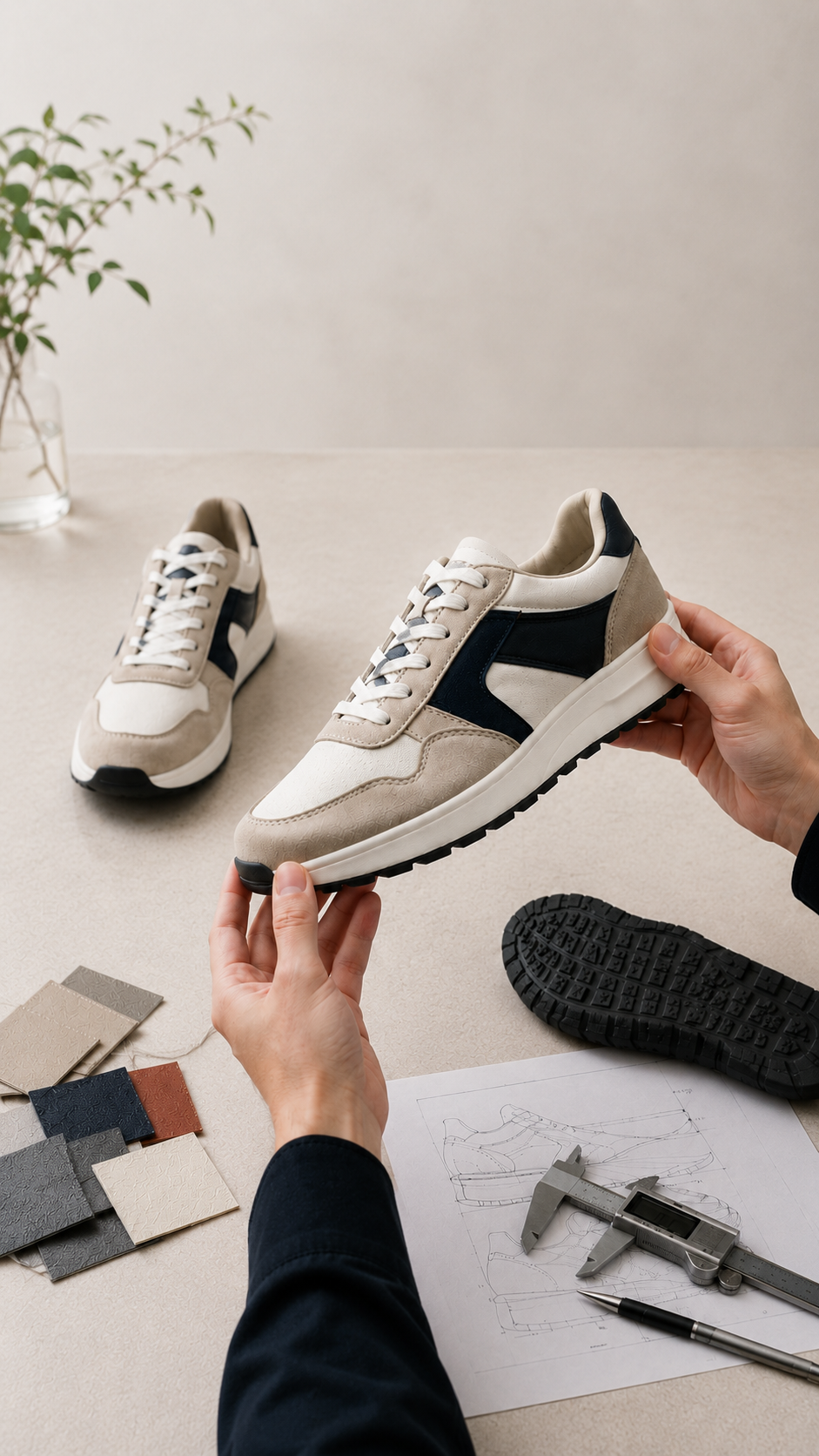
Place the pair on a flat surface and review it from the front, side, rear, and top. Check whether the toe shape, topline, vamp, heel profile, and overall proportions match the intended design.
The left and right shoes should appear balanced. Compare their height, curvature, panel positioning, and general posture. Obvious differences may indicate inconsistencies in pattern cutting, stitching, lasting, or outsole positioning.
The overall form is created by the relationship between the upper pattern, last, materials, and outsole. If the main proportions are incorrect, adjusting a logo or decorative detail will not solve the underlying problem.
Always compare the sample with an approved drawing, reference shoe, previous sample, or clearly marked photograph. Review comments should be based on a defined reference rather than memory alone.
Check the last selection and fit target
The last determines the internal volume of the shoe and strongly influences its external shape. A sample may follow the drawing closely and still feel wrong if the selected last is unsuitable for the product.
The sample should be tried on by a wearer whose foot is close to the target sample size. During fitting, confirm:
- whether the toes have sufficient space;
- whether the forefoot feels compressed;
- whether the instep is too tight or too loose;
- whether the heel lifts while walking;
- whether the shoe bends at the natural flexing point of the foot;
- whether seams, reinforcements, or internal components create pressure.
Fit should be evaluated while standing and walking, not only while seated. The wearer should also use the type of socks expected for the final product.
A running shoe, work shoe, loafer, boot, and dress shoe should not be assessed using the same fitting standard. Intended use, upper material, lining thickness, fastening system, insole thickness, and target customer all affect the correct fit.
Review how the upper and outsole work together
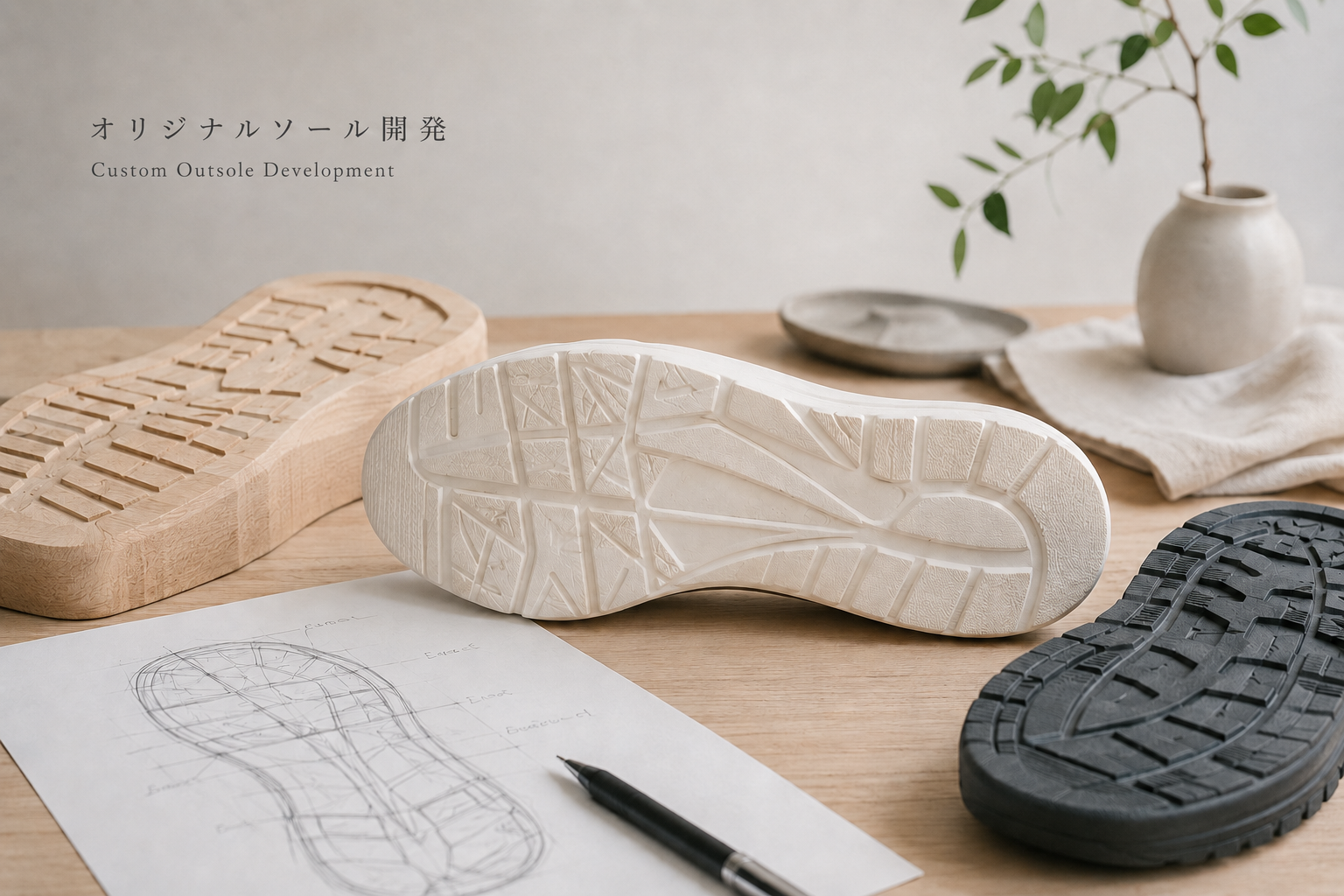
The outsole has a major influence on the appearance, balance, and wearing experience of the finished shoe. It should not be reviewed separately from the upper.
Check whether the outsole length, width, toe profile, midfoot shape, and heel position connect naturally with the upper. The upper should sit centrally on the outsole, with reasonably consistent margins on both sides.
Also review:
- toe spring and heel height;
- the position of the forefoot flexing area;
- the proportion between the outsole sidewall and upper;
- heel-seat position and rear alignment;
- the bonding line around the shoe;
- gaps, excessive adhesive, lifting, or uneven pressing.
An attractive outsole may still be unsuitable if it does not match the last, upper volume, or construction method. If the outsole direction is wrong, repeated upper-pattern revisions may not solve the problem.
Compare materials with the approved standard
Material approval should cover more than color.
Compare the sample with the approved material swatches and confirm surface texture, grain, thickness, softness, stretch, gloss, backing, and overall handling.
For natural leather, some variation is unavoidable. However, the selected grade and the acceptable range of natural markings, wrinkles, scars, and grain variation should still be clearly defined.
For synthetic leather, mesh, woven fabrics, foam, lining, and reinforcement materials, review both appearance and production stability.
A material substitution should never be treated as a minor change without evaluation. Changes in thickness, stiffness, stretch, or backing may affect lasting, fit, seam appearance, folding, edge finishing, and overall structure.
Colors should be reviewed under suitable lighting. The upper, lining, outsole, laces, thread, logos, and trims should be assessed as a complete colorway rather than approved separately.
Inspect stitching, components, and workmanship
Workmanship issues are easier to correct during sampling than after bulk production has started.
Check whether stitch lines are smooth and consistent, especially around curves, toe caps, eyestays, collars, and back seams. Review stitch density, thread color, seam allowance, overlapping points, skipped stitches, loose threads, thread finishing, and distorted panels.
Components should also be checked carefully:
- eyelets and hooks should be positioned evenly;
- logos should have the correct size, position, and orientation;
- tongues should sit centrally;
- collar padding should be balanced;
- zippers and fastening systems should operate smoothly;
- insoles should fit correctly and remain flat;
- labels and size markings should match the specification.
The inside of the shoe is as important as the outside. Check for rough edges, exposed reinforcement, hard adhesive areas, uneven lining, folded seam allowances, or any component that may cause discomfort.
Check left-right consistency
Samples often involve more manual handling than bulk goods, so left-right differences may appear.
Compare both shoes for:
- overall length and height;
- toe shape;
- vamp position;
- collar height;
- back-seam alignment;
- logo placement;
- outsole positioning;
- stitching and panel symmetry.
Minor handmade variation may be acceptable in an early sample, but the factory should still understand which measurements and visual points must be controlled during production.
If only one shoe has been produced, the matching shoe should normally be completed before final approval when symmetry, fit balance, or left-right appearance is important.
Test the shoe as a product, not as a display sample
Shoes are made to be worn. Basic wear testing should therefore be part of the review.
Walk on different surfaces, flex the forefoot, use stairs, and inspect the shoe after a reasonable period of wear. Observe whether:
- the heel remains stable;
- the upper develops unexpected creasing;
- the outsole feels excessively stiff;
- pressure points appear over time;
- the insole moves or lifts;
- the fastening system remains secure.
For footwear with specific functional requirements, visual review is not enough. Depending on the product and target market, testing may be required for slip resistance, outsole adhesion, flexing durability, colorfastness, waterproofing, abrasion resistance, or other performance criteria.
Appearance approval and functional testing should be treated separately. A sample can look correct while failing an important performance requirement.
Separate visual approval from production approval
A common problem in footwear development is assuming that visual approval also means the product is ready for bulk production.
Before final approval, confirm that the following points have been fixed:
- last selection and fit target;
- outsole and construction method;
- upper, lining, insole, and trim materials;
- colors and surface treatments;
- pattern and component dimensions;
- logos, labels, and packaging;
- size range and size-grading requirements;
- tolerances and QC checkpoints.
Revision comments should be written clearly and, where possible, marked directly on photographs. Avoid vague comments such as “make it better” or “the shape is wrong.” State which area must change, how it should change, and which reference should be followed.
Once the final sample is approved, it should become the production reference. Any later change should be documented rather than agreed only through informal messages.
Choose a partner that can identify the cause of a problem
A capable footwear OEM or ODM partner should do more than pass revision comments to the factory. They should be able to explain whether a problem comes from the last, pattern, material, outsole, construction method, bonding preparation, or workmanship.
This distinction is important.
Changing the upper pattern will not solve a fit problem caused by the last. Adding more adhesive will not correct poor bonding preparation. Replacing the material may alter both appearance and fit.
Correctly identifying the cause of a problem reduces repeated sampling and helps the brand make decisions based on the complete product rather than isolated details.
At Asahihara Trading Co., Ltd., we support footwear OEM and ODM projects in China through sample development, material and outsole sourcing, last and specification coordination, sample revision management, production follow-up, QC, and bulk-production coordination.
If you are reviewing a shoe sample or preparing a new footwear project, contact us to discuss the product category, fit target, construction, materials, expected quantity, and development schedule.
Related Posts