




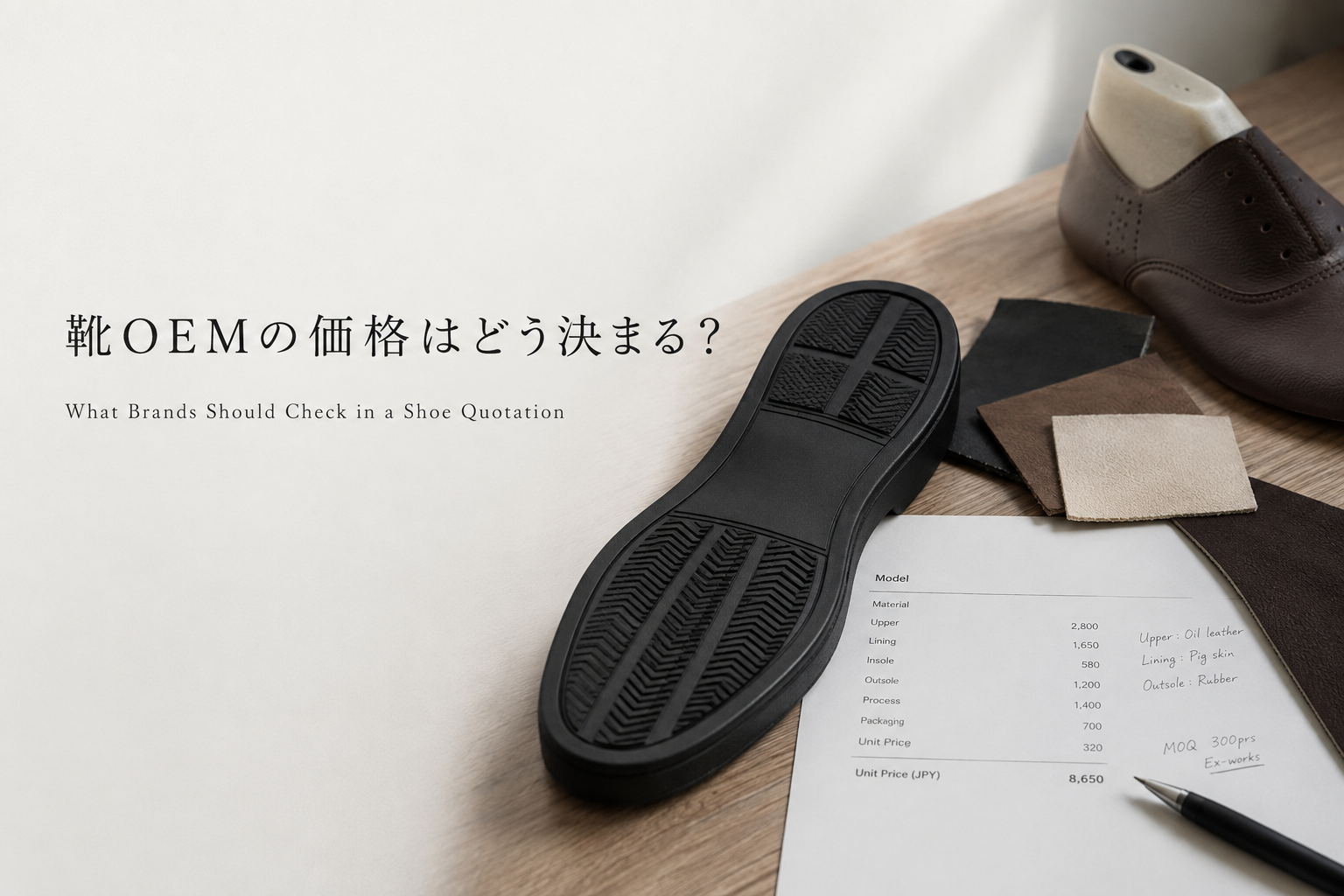
How Is Footwear OEM Pricing Calculated? What Brands Should Check in a Shoe Quotation
When comparing footwear OEM suppliers, the easiest number to focus on is the price per pair.
However, two quotations for what appears to be the same shoe may be based on completely different materials, construction methods, order quantities, packaging standards, inspection requirements, or trade terms.
A lower quotation does not necessarily mean that the same product can be manufactured at a lower cost.
To compare footwear quotations properly, brands need to understand what is included in the price and what conditions the quotation is based on.
1. Upper Materials
Upper materials are one of the main factors affecting footwear cost.
Common options include:
• Genuine leather
• Synthetic leather
• Suede
• Mesh
• Canvas
• Knitted materials
• Technical textiles
• Combinations of multiple materials
Even when two quotations both specify genuine leather, the actual cost can vary significantly.
Leather pricing is affected by factors such as:
• Leather type
• Grade
• Thickness
• Surface finish
• Cutting yield
• Color
• Purchasing quantity
For example, two shoes may both be described as “all leather,” while the leather grade, thickness, finishing, and lining specification are completely different.
Synthetic materials also vary in quality.
Two synthetic leathers may look similar in photographs but differ in softness, durability, surface stability, and aging performance.
For this reason, brands should compare actual material specifications rather than material names alone.
2. Lining, Insoles, and Internal Materials
The inside of the shoe is less visible, but it still contributes to both product quality and manufacturing cost.
These components may include:
• Textile lining
• Synthetic lining
• Leather lining
• Foam
• Reinforcement materials
• Toe and heel counters
• Insoles
• Footbeds
• Cushioning materials
A shoe using leather lining will normally cost more than the same shoe using a standard textile lining.
Likewise, a simple flat insole is not directly comparable with a molded or performance-oriented footbed.
When comparing quotations, brands should confirm whether the internal specifications are actually the same.
3. Outsole
The outsole can have a significant impact on the quotation.
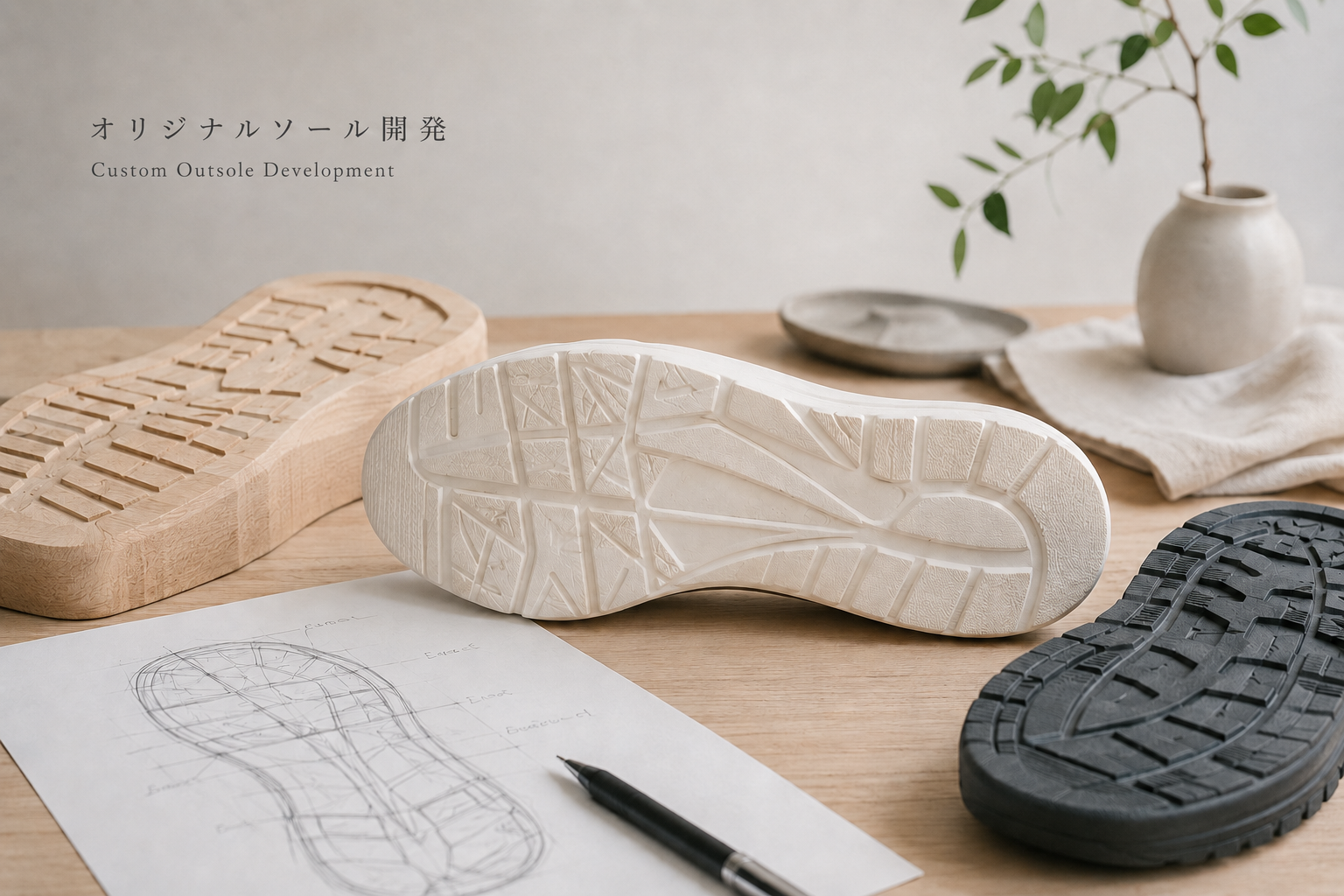
There is a clear difference between using an existing outsole and developing an original outsole.
Using an existing outsole can usually reduce:
• Mold cost
• Development time
• Initial investment
• Minimum-order pressure
An original outsole may require:
• Outsole design
• Physical master-model confirmation
• Mold making
• Molds for each required size
• Trial outsole production
• Revisions before final approval
Outsole material also affects pricing.
Common materials include:
• Rubber
• EVA
• TPR
• TPU
• PU
• Combinations of multiple materials
When reviewing a quotation, brands should confirm whether the price is based on an existing outsole or a custom-developed outsole, and whether mold costs are included or quoted separately.
4. Construction and Workmanship
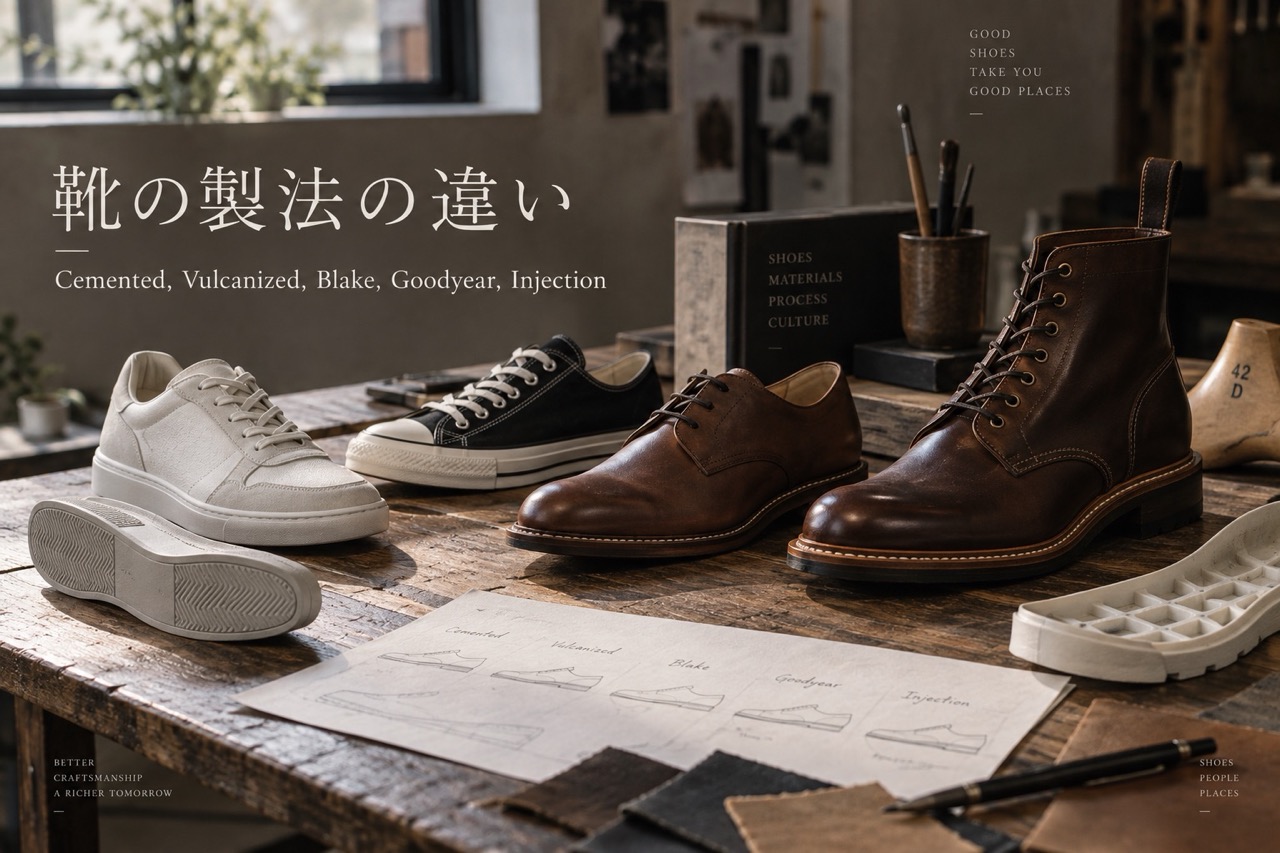
Different footwear constructions require different amounts of labor, equipment, and production time.
Examples include:
• Cemented construction
• Vulcanized construction
• Stitched constructions
• Injection-molded constructions
• Combinations of several processes
A leather shoe with multiple panels, detailed stitching, edge finishing, and additional handwork cannot be compared directly with a simpler casual sneaker.
More complicated construction generally requires more cutting, stitching, lasting, bonding, finishing, and quality-control work.
The method used to manufacture the shoe therefore has a direct impact on price.
5. Order Quantity
Footwear production includes many fixed or semi-fixed costs.
These may include:
• Material minimums
• Production preparation
• Cutting setup
• Machine adjustment
• Production setup
• Packaging preparation
• Material and production loss
When these costs are divided across 100 pairs instead of 300 pairs, the cost per pair is usually higher.
This does not mean that small-batch production is impossible.
It means that small orders have a different cost structure.
Brands should ask:
• What is the minimum workable quantity?
• Is there a small-order surcharge?
• At what quantity does the price approach the normal production level?
• Can multiple colors share one total quantity?
The answer depends on the design, materials, outsole, and production method.
6. Number of Colors
Producing one style in several colors may create additional production requirements.
Each color may require separate:
• Material purchasing
• Thread preparation
• Outsole color preparation
• Cutting and sewing management
• Production changeovers
• Packaging control
For this reason, 300 pairs in one color may be priced differently from 300 pairs divided into three colors.
When requesting a quotation, brands should clearly state both the total quantity and the quantity per color.
7. Size Range
A wider size range can increase production complexity.
Different sizes may require:
• Pattern grading
• Different lasts
• Different outsole sizes
• Separate cutting management
• Size-specific production control
• Size-specific packaging
For custom outsoles, additional sizes may also require additional mold investment.
A quotation based on three sizes may therefore change if the final order requires six or seven sizes.
The planned size range should be provided before the quotation is finalized.
8. Custom Logos and Components
Brand-specific details may require additional development.
Examples include:
• Embossed leather logos
• Metal logos
• Rubber patches
• TPU components
• Custom eyelets
• Custom buckles
• Molded heel components
• Printed insoles
• Branded outsole details
Some of these require molds or tooling. Others may have their own minimum-order requirements.
The supplier should clearly explain which components are standard and which require separate development.
9. Packaging
Footwear packaging may include:
• Standard shoe boxes
• Tissue paper
• Stuffing paper
• Silica gel
• Polybags
• Size stickers
• Export cartons
Some suppliers include standard packaging in the unit price, while others quote certain items separately.
Custom shoe boxes, branded tissue paper, bags, inserts, or premium packaging increase cost.
Even when a quotation is described as “all-in,” brands should confirm exactly what is included.
10. Inspection and Testing
Factory QC is normally part of the production process.
However, additional requirements may include:
• Independent third-party inspection
• 100% inspection
• AQL-based random inspection
• Bonding-strength testing
• Flexing tests
• Slip-resistance testing
• Colorfastness testing
• Waterproof testing
These services may involve separate costs.
If the brand has its own inspection or laboratory-testing requirements, they should be discussed at the quotation stage.
11. Trade Terms
A unit price has little meaning without the trade term.
Common examples include:
• EXW
• FOB
• DAP
An EXW quotation covers a different range of costs from an FOB quotation.
A DAP quotation includes additional transportation-related costs compared with EXW or FOB.
For this reason, a lower EXW price cannot be compared directly with a higher FOB or DAP price.
When comparing suppliers, brands should request quotations based on the same trade term whenever possible.
12. Sample Cost and Bulk-Production Price Are Different
Sample development has a very different cost structure from bulk production.
A footwear sample may require:
• Small-quantity material sourcing
• Manual pattern adjustment
• Individual cutting and stitching
• Outsole sourcing
• Preparation of custom components
• Sample revisions
• International shipping
As a result, the cost per pair for samples is normally much higher than the bulk-production unit price.
Brands should confirm:
• Sample fee
• What is included in the sample fee
• Revision charges
• Shipping costs
• Whether any sample fee can be credited toward bulk production
The sample price should not be treated as the expected bulk-production price.
13. Why a Quotation May Need to Be Reviewed After Sampling
Before the first sample is made, some production conditions may still be based on estimates.
During sample development, the supplier may discover that:
• Actual material consumption is higher than expected
• The selected leather grade costs more than initially estimated
• Additional reinforcement is required
• The outsole needs modification
• The construction requires more labor
• A custom component is necessary
If the original assumptions change during development, the bulk-production price may need to be reviewed.
The important point is transparency.
A professional supplier should clearly distinguish between:
• Confirmed conditions
• Estimated conditions
• Items that may change after sample development
If the price changes, the supplier should be able to explain which specification or production condition caused the adjustment.
An unexplained price increase is very different from a price revision caused by a clearly documented change in specification or production conditions.
14. How Brands Should Compare Footwear Quotations
When comparing several suppliers, brands should not look only at the final unit price.
The following conditions should be compared side by side:
• Upper materials
• Lining
• Insole
• Outsole
• Construction
• Order quantity
• Quantity per color
• Size range
• Custom components
• Packaging
• Inspection
• Testing
• Mold charges
• Trade terms
• Payment terms
• Production lead time
If these conditions are different, the quotations are not directly comparable.
For example, a quotation of USD 25 per pair and another of USD 35 per pair may represent completely different materials and production specifications.
The clearer the product specification becomes, the more meaningful the price comparison becomes.
How Asahihara Co., Ltd. Prepares Footwear Quotations
At Asahihara Co., Ltd., footwear quotations are prepared according to the actual project rather than using one fixed price for every shoe category.
Before preparing a detailed quotation, we normally confirm:
• Product category
• Reference images or design drawings
• Expected quantity
• Number of colors
• Size range
• Upper materials
• Lining specification
• Outsole direction
• Construction method
• Packaging requirements
• Target price
• Required delivery schedule
If the specification is still at an early stage, we can first provide an approximate price range based on the available information.
Once the materials, outsole, construction, and quantity are clearer, the quotation can be refined.
For smaller initial orders, we also explain whether a small-order surcharge applies and what quantity would provide a more standard production price.
The objective is not simply to provide a number, but to make the basis of that number as clear as possible.
Conclusion
Footwear OEM pricing is determined by a combination of factors, including:
• Materials
• Outsole
• Construction
• Quantity
• Colors
• Size range
• Custom components
• Packaging
• Inspection
• Testing
• Trade terms
For brands, the most important question is not simply which supplier offers the lowest price.
The more important question is whether the quotations are based on the same product specification and commercial conditions.
A useful footwear quotation should make it possible to understand why the shoe costs what it costs.
When specifications, MOQ, and commercial conditions are transparent, brands can make better decisions before investing in samples and bulk production.
Brands preparing a new footwear project may contact Asahihara Co., Ltd. with reference images, expected quantity, size range, material direction, target price, and required schedule.
Related Posts