




How Long Does Footwear OEM Take? From Sampling to Bulk Production
“How long does footwear OEM take?” is one of the first questions brands ask when starting a new shoe project.
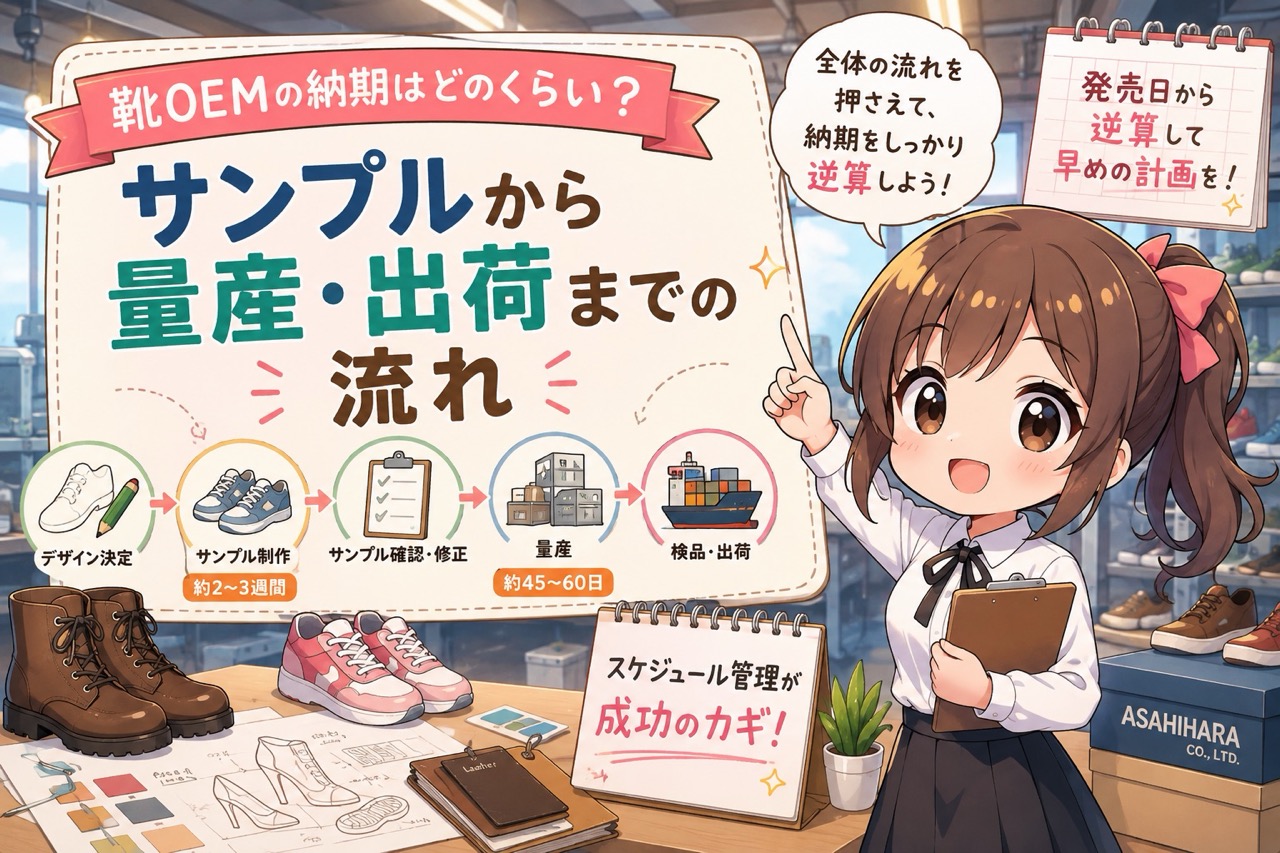
At Asahihara Co., Ltd., a standard first sample generally takes around 2–3 weeks once the necessary materials and components are ready.
For standard bulk-production projects, we normally use approximately 45–60 days as a reference after the main production materials, specifications, and production conditions have been confirmed.
However, the total project schedule is not simply “2–3 weeks + 45–60 days.”
Sample review, revisions, material preparation, inspection, and international shipping all require additional time.
For this reason, brands with a fixed launch date should plan the entire development process rather than looking only at the factory production period.
1. Before the First Sample
Before sampling begins, the main direction of the shoe needs to be clear.
This usually includes the upper materials, outsole, last, construction, colors, size range, and expected quantity.
If the project uses an existing outsole and readily available materials, development can move relatively quickly.
If the shoe requires a custom outsole, special leather, custom colors, hardware, or molded components, additional development time should be expected.
The more decisions that are made before sampling, the less time is usually lost later.
2. First Sample and Revisions
Once the main materials and construction are confirmed, the first sample can be produced.
For a relatively straightforward project, around 2–3 weeks is a common reference after all necessary sample materials are ready.
The first sample is usually not the final approved shoe.
Its purpose is to check the actual shape, fit, materials, outsole balance, construction, and overall appearance.
After the sample is reviewed, some projects need only minor adjustments. Others may require another sample.
Changing thread color or logo placement is relatively simple.
Changing the last, outsole, upper pattern, fit, or construction can take considerably longer because these changes affect the basic structure of the shoe.
The speed of the brand’s feedback also matters. If sample comments take several weeks, the entire project moves back by the same amount.
3. Custom Outsoles Take Longer
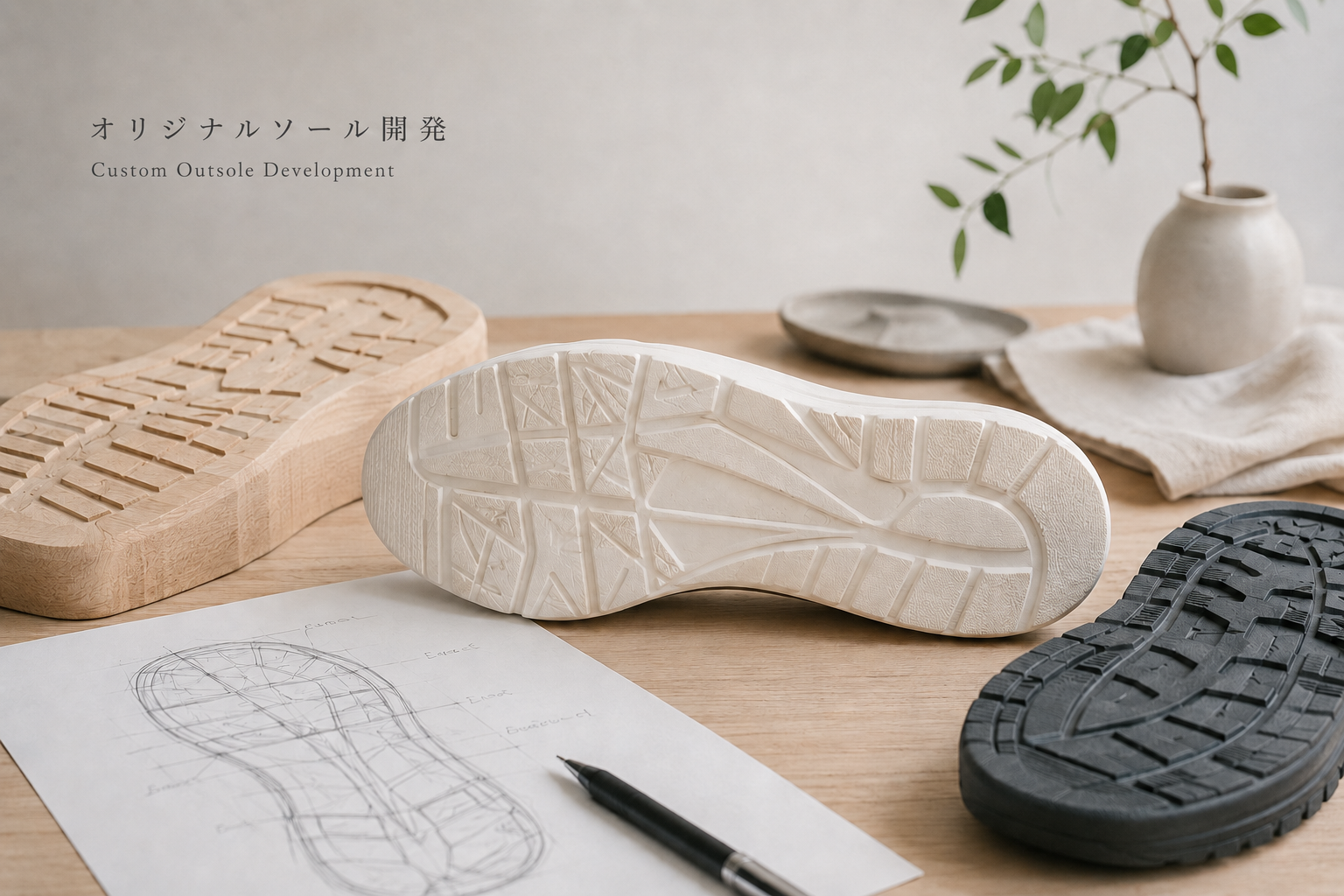
A custom outsole adds another development process before the shoe can be finalized.
The general flow may include:
• Outsole design
• Physical master-model confirmation
• Revisions
• Mold making
• Trial outsole
• Complete shoe sample
This is very different from selecting an existing outsole that is already available.
If the product launch date is fixed, deciding early between an existing outsole and a custom outsole can make a significant difference to the schedule.
Large design changes after mold making has started may also add both cost and time.
4. Preparing for Bulk Production
Once the final sample and specification are approved, the factory prepares the materials for bulk production.
This may include leather or textile uppers, lining, outsoles, insoles, laces, hardware, labels, shoe boxes, and other components.
Some standard materials can be prepared quickly.
Custom colors, special leather, molded parts, and brand-specific components may require longer lead times.
At Asahihara Co., Ltd., standard bulk-production projects are generally planned around approximately 45–60 days after the main production materials, final specifications, and production conditions have been confirmed.
The actual period still depends on the shoe category, construction, quantity, factory capacity, and material situation.
A simple sneaker and a complex leather boot should not be expected to follow exactly the same schedule.
5. Inspection and Shipping Also Need Time
Production completion is not the same as final delivery.
Before shipment, the goods may go through factory QC, 100% inspection, AQL-based random inspection, or independent third-party inspection depending on the project.
If any issues are found, the factory also needs time for correction.
After that, export documentation, freight booking, customs procedures, international transportation, import clearance, and local delivery still need to be considered.
Under FOB terms, the production schedule and the final arrival date at the brand’s warehouse are different.
For a brand planning around a launch date, the safest approach is to work backward from the required arrival date.
6. What Usually Causes Delays?
In our experience, footwear projects are often delayed by a few recurring issues.
Late Design Changes
Changing the design after sampling can affect patterns, materials, outsole selection, and even the last.
Material or Outsole Changes
Replacing a major material or outsole may require new sourcing and another sample.
Slow Sample Feedback
Development cannot continue while the sample is waiting for approval.
Custom Components
Original outsoles, metal hardware, TPU parts, buckles, and other custom components require additional development time.
Chinese New Year
For production in China, the period around Chinese New Year needs special planning.
Footwear factories, material suppliers, outsole factories, mold factories, and packaging suppliers do not always stop and restart at the same time.
Capacity also becomes tight before the holiday.
Projects that need production or shipment around Chinese New Year should therefore be planned earlier than usual.
7. A Better Way to Think About Lead Time
Good lead-time management is not about forcing every stage to move as quickly as possible.
It is about reducing unnecessary waiting and repeated work.
Clear references, early decisions on quantity and size range, confirmed materials, fast sample feedback, and avoiding major changes after final approval can save more time than simply asking the factory to produce faster.
At Asahihara Co., Ltd., we manage footwear OEM and ODM projects as a complete process rather than treating lead time as only the number of days on the production line.
This includes sample development, material and outsole confirmation, revisions, bulk-production preparation, production follow-up, quality control, third-party inspection coordination, and shipment support.
The goal is not to promise the shortest possible lead time.
The goal is to give the brand a realistic schedule, make each stage clear, and identify possible delays before they become larger problems.
Conclusion
For a standard footwear project, the first sample may take around 2–3 weeks after the necessary sample materials are ready.
Bulk production at Asahihara Co., Ltd. is generally planned around approximately 45–60 days after the main production materials, specifications, and production conditions are confirmed.
But the complete project also includes sample review, revisions, material preparation, inspection, and shipping.
So rather than asking only, “How many days does production take?”, brands should ask:
“When do we need to start if the goods must arrive by a specific date?”
That is the more practical way to plan footwear development.
Brands preparing a new footwear project may contact Asahihara Co., Ltd. with reference images, expected quantity, size range, material direction, and required delivery date.
Related Posts