



Shoe Sole Materials Explained: EVA, Rubber, TPR and TPU — What Is the Difference?
Shoe Sole Material Guide
When choosing a shoe sole, brands often hear terms such as EVA, rubber, TPR and TPU.
If you are developing shoes for the first time, these names can be confusing.
A simple way to remember them is:
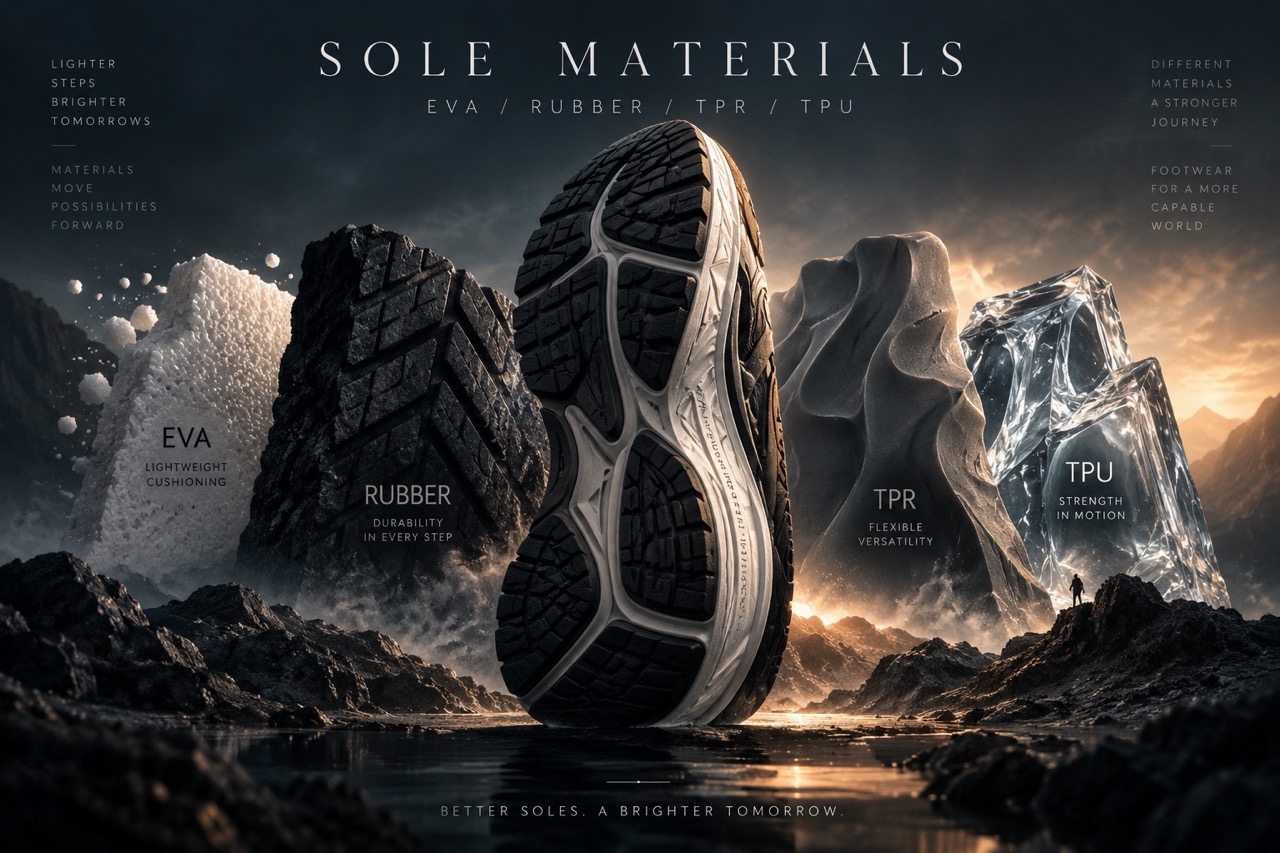
EVA = lightweight and cushioning
Rubber = grip and durability
TPR = flexible and practical for many everyday shoes
TPU = strong and supportive
However, these materials are not always used separately.
A single shoe may use two or three different materials at the same time.
For example, a running shoe may use EVA for cushioning, rubber on the bottom for grip, and TPU around the heel for support.
The right material depends on what the shoe needs to do.
1. EVA: Lightweight and Cushioned
EVA is a lightweight foam material widely used in sneakers, running shoes, walking shoes and sandals.
It is often used in the middle part of the sole, called the midsole.
The main reasons are simple:
- It is light
- It can provide cushioning
- It can be made soft or firm
- It works well for thick sole designs
This is why EVA is common in shoes that need to feel light and comfortable.
However, EVA is usually not as resistant to wear as rubber.
If EVA is used directly on the ground, it may wear faster depending on the design and use.
For this reason, many sneakers combine an EVA midsole with rubber on the areas that touch the ground most often.
2. Rubber: Grip and Durability
Rubber is commonly used on the bottom surface of a shoe.
Its main strengths are:
- Good grip
- Good wear resistance
- Good durability
This makes rubber suitable for sneakers, running shoes, outdoor footwear, work shoes and many other types of footwear.
The disadvantage is that rubber is usually heavier than EVA.
For a lightweight sneaker, the entire sole does not always need to be rubber.
Instead, rubber can be added only to the heel, forefoot or other areas that need more grip and durability.
This helps balance weight and performance.
3. TPR: A Practical Choice for Everyday Shoes
TPR stands for Thermoplastic Rubber.
You do not need to remember the technical definition.
The important point is that TPR can feel flexible like rubber while being relatively easy to mold into different sole shapes.
It is commonly used in:
- Casual shoes
- Fashion shoes
- Leather shoes
- Sandals
TPR is often chosen because it offers a practical balance between:
- Flexibility
- Appearance
- Production cost
- Moldability
It is especially useful for everyday footwear where extremely high sports performance is not required.
However, not all TPR soles feel the same.
Different TPR materials can vary in hardness, weight, grip and durability.
So simply saying “TPR sole” does not tell you everything about the final shoe.
4. TPU: Mainly for Strength and Support
TPU is different from EVA, rubber and TPR in one important way.
In many shoes, TPU is not used for the entire sole.
Instead, it is often used as a support part.
For example, TPU may be used
- Around the heel
- Under the arch or midfoot
- As a support plate
- As a transparent or decorative molded part
- In technical sports-shoe structures
TPU is strong and keeps its shape well.
This makes it useful when a shoe needs more stability or support without adding a large heavy component.
The harder or transparent parts seen around the heel of many sports shoes are sometimes made from TPU.
TPU can also be used as part of the outsole, but it is often combined with EVA or rubber rather than used alone.
5. Which Material Is Best?
There is no single answer.
The better question is:
“What does this shoe need?”
For example:
Running Shoes EVA for cushioning and low weight Rubber for grip and durability TPU for heel or midfoot support
Casual Sneakers EVA for comfort Rubber or TPR for the bottom
Leather Shoes Rubber or TPR depending on the design, weight, flexibility and target price
Outdoor Shoes EVA for cushioning Durable rubber for grip TPU for additional support
This is why choosing a sole material should start with the shoe itself, not with the material name.
6. What Should Brands Think About?
When developing a shoe, brands should consider:
- How light should the shoe be?
- How much cushioning is needed?
- Does it need strong grip?
- How important is wear resistance?
- Should the sole feel soft or firm?
- Does the shoe need extra support?
- What should the sole look like?
- What is the target price?
- What is the expected production quantity?
A fashion sneaker and a running shoe do not need the same sole.
A leather loafer and an outdoor shoe also have very different requirements.
The most expensive material is not automatically the best choice.
The best material is the one that fits the purpose of the shoe.
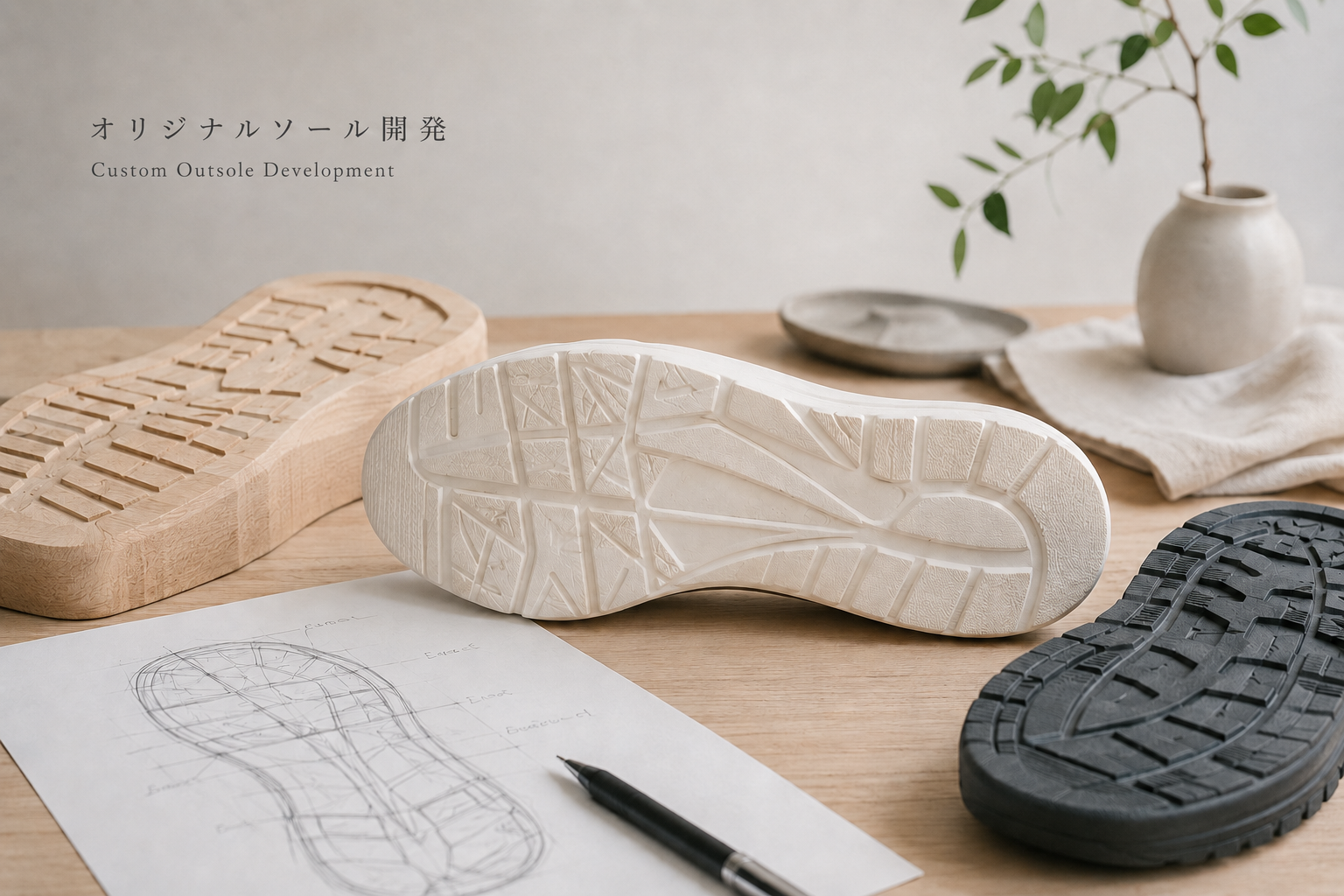
7. Existing Sole or Custom Sole?
Brands also need to decide whether to use an existing sole or develop an original one.
An existing sole is usually faster and requires less initial investment.
It can be a practical choice for smaller first orders.
A custom sole gives the brand more freedom over:
- Shape
- Thickness
- Bottom pattern
- Branding
- Material combination
However, custom development also requires more time and mold investment.
The right choice depends on the design, quantity, budget and development schedule.
How Asahihara Co., Ltd. Supports Sole Development
At Asahihara Co., Ltd., we do not choose sole materials only because “EVA is light” or “rubber is durable.”
We first look at the shoe category, design, target weight, expected quantity, target price and required performance.
Depending on the project, we can use an existing outsole or develop an original outsole structure.
In many cases, the best result does not come from choosing one material.
It comes from using different materials in the right places.
Conclusion
The easiest way to remember the main differences is:
EVA = lightweight and cushioning
Rubber = grip and durability
TPR = flexible and practical for many everyday shoes
TPU = strength and support
None of these materials is best for every shoe.
The right choice depends on the design, use, weight, comfort, durability, price and production conditions.
For many modern shoes, combining several materials is more practical than using only one.
Brands developing new footwear may contact Asahihara Co., Ltd. with reference images, expected quantity, target price and outsole direction for further discussion.
Related Posts