




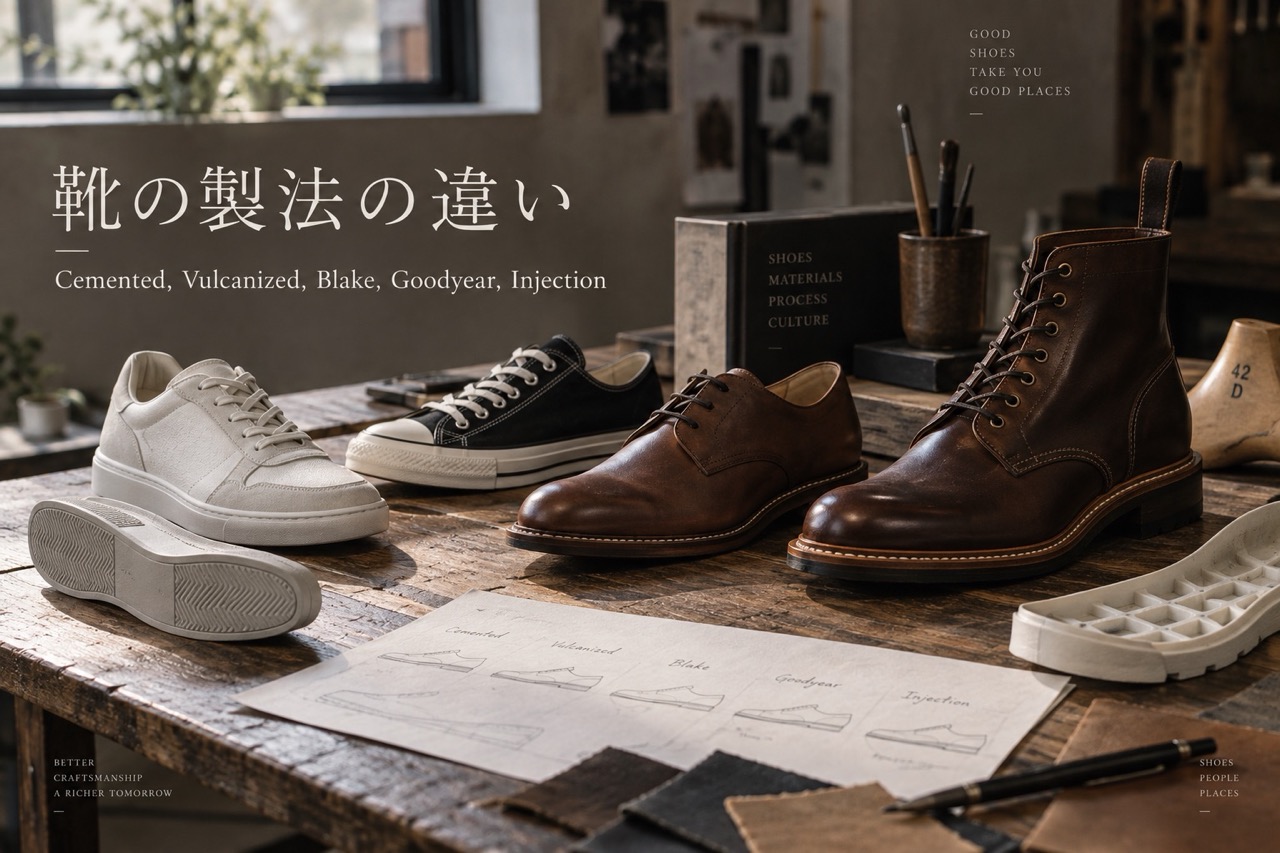
Shoe Construction Methods Explained: Cemented, Vulcanized, Blake, Goodyear Welted and Injection
1. Cemented Construction: The Most Flexible Choice for Modern Footwear
Cemented construction is one of the most common methods used in modern footwear.
The upper is lasted into shape, and the outsole is bonded to the bottom using adhesive and pressure. This method is widely used in sneakers, leather shoes, fashion footwear, boots and many other categories.
Its biggest advantage is design flexibility.
A brand can choose from many different outsole shapes, materials and upper constructions without being restricted by a visible stitching structure.
Cemented shoes can also be relatively lightweight, depending on the materials used.
Common applications include:
- Casual sneakers
- Fashion sneakers
- Leather shoes
- Boots
- Sports-inspired footwear
- Women’s shoes
Cemented construction is sometimes incorrectly seen as a “lower-grade” method compared with stitched constructions. In reality, that is too simple.
A high-priced designer sneaker or luxury leather shoe may also use cemented construction. Quality depends on the materials, adhesive process, surface preparation, lasting accuracy, workmanship and quality control—not only on the construction name.
For many OEM projects, cemented construction is also practical because it can work with both existing outsoles and custom-developed outsoles.
2. Vulcanized Construction: Common in Classic Canvas Sneakers
Vulcanized construction is strongly associated with classic canvas sneakers.
In this method, rubber parts such as the outsole and foxing tape are assembled around the shoe and then cured using heat and pressure.
The rubber becomes stable during the vulcanization process and bonds into the final structure.
This construction is often used for:
- Canvas sneakers
- Skate-style shoes
- Classic low-top and high-top sneakers
- Retro casual footwear
The visual identity is also distinctive. Many vulcanized shoes have a rubber foxing tape running around the side of the shoe.
Compared with a typical cemented sneaker, vulcanized shoes have a different production process and usually require specialized factories and equipment.
This also means that a factory that is good at cemented sports shoes is not automatically good at vulcanized shoes.
For OEM development, the construction should therefore be decided early because it affects the factory choice, outsole structure, materials and production process.
3. Blake Construction: A Slim and Flexible Method for Leather Shoes
Blake construction, often called McKay construction in Japan, is mainly used in leather footwear.
The outsole is stitched directly to the upper and insole from inside the shoe.
Compared with Goodyear welted construction, the structure is simpler and usually creates a slimmer, lighter and more flexible shoe.
This makes it suitable for:
- Dress shoes
Loafers
Lightweight leather shoes
Fashion leather footwear
One visual advantage is that the edge of the shoe can remain relatively clean and narrow.
The construction can therefore work well for elegant or modern leather-shoe designs.
However, because the stitching passes through the inside of the shoe, the structure and comfort feel are different from Goodyear welted footwear.
For brands, the choice between Blake and Goodyear should not be based only on which method sounds more premium. It should depend on the desired silhouette, flexibility, weight and price.
4. Goodyear Welted Construction: More Structure and More Processes
Goodyear welted construction is commonly associated with traditional leather shoes and boots.
Instead of attaching the outsole directly to the upper, a strip called a welt is used between the upper and sole structure.
This creates a more layered construction.
Compared with cemented or Blake footwear, Goodyear welted shoes usually require more components and more production steps.
They are often used for:
- Dress shoes
- Service shoes
- Work-inspired leather shoes
- Boots
- Classic men’s footwear
The construction usually creates a more substantial appearance and allows the shoe to have a strong, structured character.
It is also commonly associated with shoes that can be resoled, although actual repairability depends on the specific design and condition of the shoe.
The trade-off is that the construction normally requires more labor, more specialized production and higher manufacturing cost.
For small OEM orders, this can also affect MOQ and unit price.
5. Injection Construction: The Sole Is Molded Directly Onto the Shoe
Injection construction works differently from the previous methods.
Instead of attaching a finished outsole to the upper, the upper is placed into a mold and the sole material is injected or molded directly around it.
Materials may include PU, TPU, PVC or other compounds depending on the product and production system.
This method is commonly used in:
Functional footwear- Safety shoes
- Sandals
- Some sports footwear
- Waterproof footwear
- High-volume casual footwear
Injection molding can create a strong connection between the upper and sole and can be highly efficient in mass production.
However, the tooling requirements are much higher.
A new design may require dedicated molds for multiple sizes, which means mold investment and MOQ are usually much more important than with a simple existing cemented outsole.
For this reason, injection construction is often better suited to projects with larger expected production quantities.
Which Construction Is Best?
There is no single answer.
A useful way to think about it is:
| Construction | Main Character |
|---|---|
| Cemented | Flexible design, broad application |
| Vulcanized | Classic rubber sneaker construction |
| Blake / McKay | Slim, light, flexible leather shoes |
| Goodyear Welted | Structured, traditional leather footwear |
| Injection | Molded sole, efficient for larger production |
A fashion sneaker does not need Goodyear welted construction just because it sounds more traditional.
A leather loafer does not automatically need Blake construction.
A sports shoe does not automatically need injection molding.
The construction should follow the product—not the other way around.
Construction Also Affects MOQ and Cost
Construction is closely connected to production quantity and price.
A cemented shoe using an existing outsole can often be developed with relatively low initial tooling investment.
A custom vulcanized outsole or foxing structure may require molds.
Goodyear welted shoes require more manual processes.
Injection footwear can require expensive size molds and higher production quantities.
This is why two shoes that look similar in a photograph may have very different production costs.
When requesting an OEM quotation, brands should therefore confirm not only the material and outsole, but also the intended construction method.
How Asahihara Co., Ltd. Approaches Footwear Construction
At Asahihara Co., Ltd., we do not choose a construction method based on which one sounds more premium.
We first look at the actual product.
The design, shoe category, outsole structure, expected quantity, target price, weight, required performance and development schedule all affect the decision.
For some projects, a cemented construction with an existing outsole is the most practical solution.
For others, vulcanized construction, stitched leather-shoe construction or custom molded soles may be more suitable.
The important point is to choose a production method that supports the design and commercial requirements of the project.
Conclusion
The easiest way to remember the differences is:
Cemented = bonded
Vulcanized = rubber cured with heat
Blake = directly stitched from inside
Goodyear Welted = stitched through a welt structure
Injection = sole molded directly onto the upper
There is no universal ranking between these methods.
A good shoe is not defined by using the most complicated construction.
It is defined by whether the construction, materials, design and production quality work together correctly.
For brands developing new footwear, deciding the construction method early can also make outsole selection, factory selection, sampling, pricing and production planning much easier.
Related Posts